
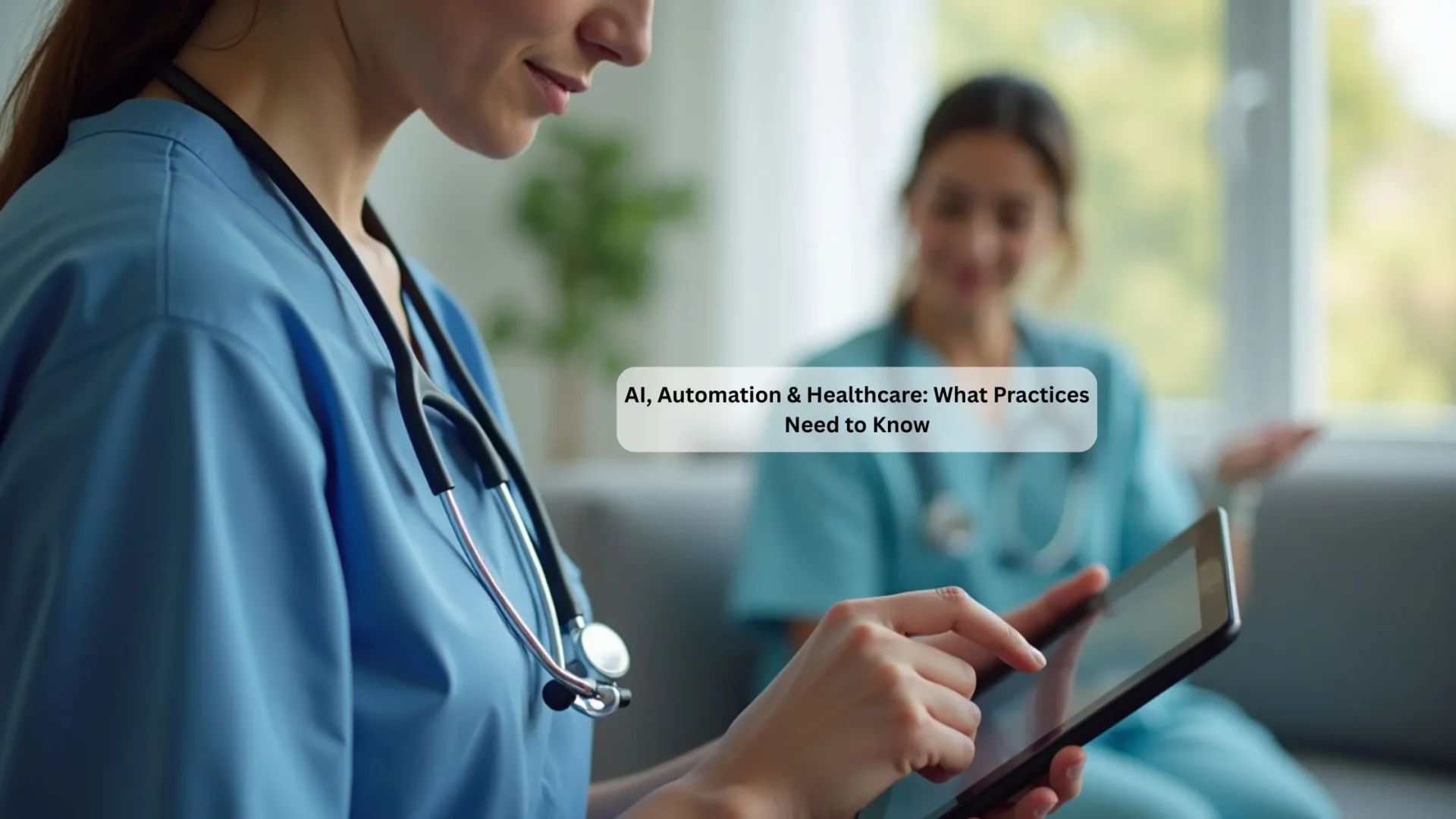

The healthcare landscape in Australia is shifting rapidly. For modern medical practices, managing daily patient care while trying to scale operations can feel like an balancing act. Between handling phone inquiries, managing appointment books, and tracking patient follow-ups, clinical staff often find themselves buried under repetitive administrative burdens.
Fortunately, a wave of digital transformation is offering a way forward. By integrating smart automation and Artificial Intelligence (AI) into daily workflows, medical practices can reclaim valuable time, reduce human error, and dramatically improve the patient experience. Here is what your practice needs to know about navigating this digital evolution and leveraging it to grow your digital footprint.
Streamlining the Patient Journey with Automation
Automation in a medical setting isn’t about replacing the human touch; it is about freeing up your team so they can focus on the patient sitting right in front of them. Think about the standard touchpoints a patient has with your clinic: booking an appointment, receiving reminders, filling out intake forms, and getting post-consultation advice.
When these processes are left to manual data entry, mistakes happen. Double-bookings occur, and staff spend hours playing phone tag. Implementing automated booking systems and interactive SMS reminders ensures your schedule stays optimized without constant administrative intervention. Furthermore, modern medical website design australia relies heavily on integrating these seamless user experiences. When a patient visits your site, they expect an intuitive, responsive interface where they can book a slot in under three clicks. If your digital front door is clunky, patients will quickly look elsewhere.
The Role of AI in Diagnostics and Administration
AI is moving past the realm of science fiction and entering the daily reality of Australian clinical workflows. On the administrative side, AI-driven medical dictation tools are allowing practitioners to record notes naturally, automatically formatting them into structured electronic health records. This slashes the hours doctors spend typing up charts after hours.
Beyond documentation, machine learning algorithms are acting as a powerful second pair of eyes in diagnostics. From highlighting potential anomalies in medical imaging to flagging drug interactions in real-time, AI acts as a safeguard. By relieving clinicians of cognitive fatigue, practices can ensure higher diagnostic accuracy and smoother patient transitions.
Growing Your Digital Footprint: SEO for Medical Practices
Investing in advanced internal technology is only half the battle; your community needs to be able to find your clinic online. This is where a highly targeted healthcare seo strategy becomes invaluable. When individuals look for new general practitioners or specialists, their first instinct is to turn to Google.
Implementing robust seo for medical practices ensures that your clinic ranks at the top of local search results when patients need you most. This involves optimizing your website’s technical structural layout, ensuring rapid page load speeds, and creating high-quality, authoritative content that answers common patient questions. Effective search engine optimization for healthcare establishes your clinicians as trusted authorities before a patient ever walks through your clinic doors.
Integrating Physical and Digital Marketing
A truly successful medical practice doesn’t isolate its digital efforts from its physical presence. Your online visibility should directly mirror the quality of care experienced inside the clinic. For instance, when a patient checks out, cohesive medical clinic marketing materials—such as clear aftercare brochures, digital intake instructions, or business cards with QR codes—can seamlessly direct them back to your online patient portal.
By blending offline touchpoints with comprehensive healthcare marketing and seo, you build a continuous loop of patient engagement. Additionally, supporting your organic visibility with targeted healthcare digital advertising campaigns allows you to fill gaps in your appointment book quickly, targeting specific demographics or specialized services your clinic wants to grow.
Finding the Balance: Tech with a Human Touch
As your practice adopts these cutting-edge tools, the ultimate goal must always remain clear: enhancing human connection. Automation should remove friction, not build a barrier between doctors and patients. By allowing technology to handle the heavy lifting of scheduling, data sorting, and initial triage, your medical team can do what they do best—provide empathetic, high-quality care.
Embracing this digital shift guarantees that your practice remains efficient, highly visible, and deeply trusted for years to come.
Frequently Asked Questions
What to know about AI in healthcare?
AI in healthcare is designed to assist medical professionals, not replace them. It is primarily used to eliminate administrative bottlenecks, transcribe clinical notes accurately, and analyze vast amounts of data to assist doctors in diagnosing conditions early. For practices, it means fewer operational errors and more dedicated time for face-to-face patient care.
Which is a safe practice when using AI tools in healthcare?
A safe practice is maintaining human-in-the-loop oversight. AI tools should only be used to generate initial drafts, transcribe records, or highlight data points, but a qualified clinician must always review, verify, and approve every medical note and clinical decision. Protecting patient data privacy and ensuring compliance with local healthcare regulations are also critical.
What are the best practices for AI in healthcare?
Key best practices include starting with low-risk administrative workflows (like scheduling or clinical documentation assistance) before moving to advanced tools. Additionally, practices should ensure seamless integration between AI software and existing Electronic Health Records (EHR), provide thorough staff training, and maintain complete transparency with patients regarding data use.
What are the three main types of automation?
In a business and clinical setting, the three main types are:
- Basic Automation: Handling simple, repetitive tasks like automated email reminders or text confirmations.
- Process Automation: Managing multi-step workflows, such as an online patient booking system connected directly to digital intake forms.
- Advanced/AI Automation: Using machine learning to handle complex, unstructured data, like medical dictation parsing or diagnostic imaging support.
What are the 4 stages of automation?
The four stages generally represent the journey of optimization:
- Manual Execution: Tasks done entirely by staff (e.g., calling patients manually for reminders).
- Assisted Automation: Software helping staff complete a task faster (e.g., click-to-dial systems or templates).
- Partial Automation: System handles the execution, but a human must trigger or finalize it (e.g., auto-generating an invoice that staff must review).
Full Automation: The entire workflow runs independently from end-to-end without human intervention (e.g., a patient books online, the slot is locked, a calendar invite is sent, and automated reminders go out entirely on autopilot).